Laser Robot Vacuum UAHRC01: 2.7kPa Buyer Decisions
A 2.7kPa peak setting is useful only when mapping, runtime, water control and recovery fit the floor plan. A laser robot vacuum is a battery-operated cleaner that maps rooms, then sweeps, vacuums and flat-mops along planned routes. UAHRC01 pairs laser radar mapping with three suction modes, app zoning and automatic recharge.
// 01 — Key takeaways
The highest of three listed suction settings; the other settings are 0.9kPa and 1.2kPa.
The catalog runtime sequence across the operating modes, paired with breakpoint resume and return-to-charge.
Separate dustbin and electronic water-tank capacities support vacuuming and flat mopping.
The listed body height; buyers should map actual furniture clearances during route trials.
Founded in 2005, Guilin Use at Home Technology Co., Ltd. documents this 7-line, 205-worker facility in its Trust Center.
// 02 — Navigation
What does laser navigation change in a robot vacuum?
In a laser robot vacuum, radar gives UAHRC01 a room map that supports planned paths, zone cleaning, map editing and virtual walls. It does not, by itself, state what size cable, chair leg or dark edge the robot can detect. Buyers should judge route coverage and recovery separately from the navigation label.
Mapping is not the same as obstacle avoidance
UAHRC01 lists laser radar mapping, two obstacle-avoidance modules and three anti-fall modules. Those systems have different jobs. Mapping estimates position and room geometry. Obstacle sensing reacts to objects in the route. Anti-fall sensing responds at edges. A procurement trial should record each behavior instead of treating “laser” as one catch-all performance claim.
The listed app functions include zone cleaning, spot cleaning, map editing, a virtual wall, carpet boost, strong cleaning, breakpoint resume and return to charge. These functions make the map operational: the buyer can ask the robot to clean a defined area and then observe whether it reaches, covers and exits that area consistently.
App support is part of the product, not an accessory
UAHRC01 connects through a mobile app over Wi-Fi. For a laser robot vacuum, that puts account setup, firmware support, permission handling and map retention inside the buying decision. The NIST IoT Device Cybersecurity Capability Core Baseline gives organizations a starting point for the cybersecurity capabilities they request when acquiring connected devices.
For a branded program, write down who operates the app service, which phone platforms are supported, what happens after a router change and how updates reach deployed units. Those are product-life questions. A clean first mapping run does not answer them.
// 03 — Specifications
Which UAHRC01 specifications drive the decision?
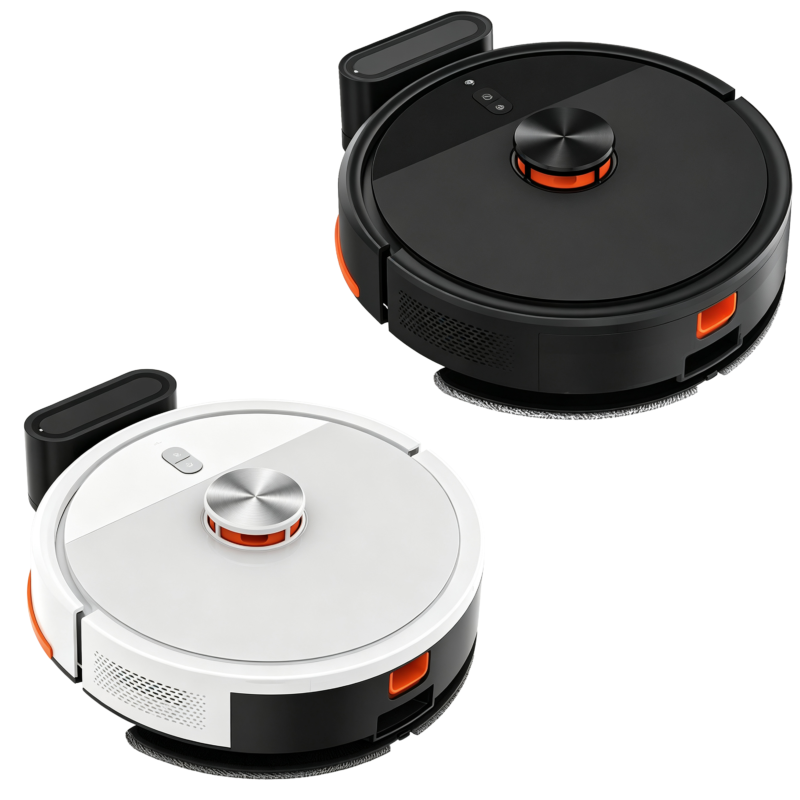
This laser robot vacuum has a compact 306 × 298 × 83mm body with a 300ml dustbin, 240ml water tank and three suction settings. Its 14.4V/2600mAh battery carries listed runtimes of about 120, 100 or 80 minutes, while charging is listed at four to six hours.
UAHRC01 specification sheet
Rev. 2026.08
| Specification | UAHRC01 catalog value | Why it matters |
|---|---|---|
| Navigation | Laser radar mapping | Enables planned laser robot vacuum routes and editable maps. |
| Cleaning module | Sweep, suck and mop three-in-one | Combines dry pickup with a flat mop. |
| Motor | High-speed DC brushless motor | Defines the listed suction architecture. |
| Battery | 14.4V/2600mAh | Sets the onboard energy store. |
| Working time | ≈120/100/80 minutes | Shows the listed runtime range across modes. |
| Charging input | DC 19V-1.2A | Must match the supplied dock and adapter. |
| Charging time | 4–6 hours | Shapes turnaround between full charges. |
| Maximum power | 50W | Describes peak electrical demand. |
| Suction settings | 0.9/1.2/2.7kPa | Gives three stated pickup levels. |
| Dustbin | 300ml | Sets debris storage before emptying. |
| Water tank | 240ml, electronic | Sets onboard water volume for flat mopping. |
| Noise level | ≤70dB | Provides the catalog ceiling, not a room-specific result. |
| Product size | 306 × 298 × 83mm | Controls clearance and storage fit. |
| Net weight | 2.45kg | Affects handling and returns logistics. |
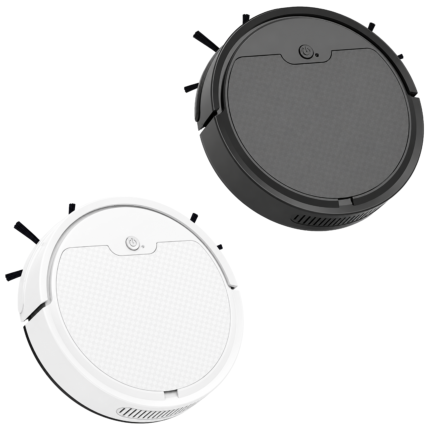
| Colors | White or black | Defines the listed standard color choices. |
UAHRC01 performance and commercial values on this page come from the current catalog record; the signed order specification controls a private-label order.
What do the catalog numbers not prove?
Suction pressure does not equal dust pickup on every floor. Runtime does not equal square metres covered. A noise ceiling does not describe sound in a furnished room. Tank capacity does not state how evenly water reaches a pad. These are reasons to use measured acceptance tasks, not reasons to ignore the specifications.
The three runtime values are presented as a sequence in the product record, but that record does not assign a named mode to each value. Keep the sequence intact in buyer-facing material unless the final manual maps each runtime to a specific setting.
// 04 — Comparison
How does UAHRC01 compare with adjacent robot vacuums?
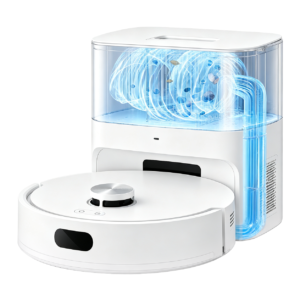
This laser robot vacuum sits between a lower-cost pedometer-planning unit and a laser model with an automatic dust base. The difference is architectural, not just a price ladder: navigation, suction, onboard collection and dock functions change together. The matrix uses direct catalog records fetched for all three named SKUs.
| Model | Navigation | Power | Suction | Collection / water | Battery | From $/unit |
|---|---|---|---|---|---|---|
| UAHRC08 | Pedometer planning | 8.6W | 1200Pa | 510ml dustbin; water capacity not listed | 3.7V/3000mAh | $16.85 |
| UAHRC01 | Laser radar mapping | 50W max | 0.9/1.2/2.7kPa | 300ml dustbin; 240ml water tank | 14.4V/2600mAh | $91.64 |
| UAHRC18 | Laser navigation | 45W | Approx. 20,000Pa | 4L dust bag; approx. 350ml combined tank | 3000mAh | $134.36 |
Three architectures serve three assortment positions
UAHRC08 uses pedometer planning and Bluetooth app control. It lists an 80-minute working time, a 510ml dustbin and no automatic charging module in its supplied feature record. UAHRC01 adds laser mapping, Wi-Fi app functions, an electronic water tank and infrared auto-recharge. UAHRC18 adds a 4L automatic dust-collection bag at its charging base.
Why does the lowest unit price need context?
The displayed “from” prices occur at different quantity tiers: 5,000 units for UAHRC08, 10,000 for UAHRC01 and 3,000 for UAHRC18. They are real catalog values, but they do not represent one shared order quantity. Compare the tier that matches the program and then compare what the dock, app and cleaning system include.
// 05 — Evaluation
What should a buyer test before signing off UAHRC01?
A laser robot vacuum evaluation uses a repeatable route, weighed debris, mapped zones and recovery events. Turn feature names into observable outcomes: area reached, debris removed, water used, obstacles contacted, map retained and dock found. Keep the floor, debris load, furniture layout, network and mode constant between runs.
Run a mapping and route trial
Start with a measured floor plan that includes open rooms, narrow passages, chair clusters, one threshold and a protected stair edge. Record mapping time, missed spaces, unwanted entries and route repetition. Then issue zone-cleaning, spot-cleaning and virtual-wall commands. Move the dock only in a separate recovery run, because dock position changes the task.
Interrupt a cleaning cycle after the robot leaves the dock. Resume it and note whether breakpoint recovery returns to the unfinished area. Run return-to-charge from more than one room. This isolates mapping, command response and homing instead of rolling them into one vague “navigation worked” result.
Measure pickup and mopping as separate jobs
Weigh a defined debris mix before placement and after collection. Record the floor type, suction setting, number of passes and residue by zone. For mopping, weigh or measure the water loaded and remaining, inspect the pad path, and log dry lanes or pooling. Do not infer pickup from 2.7kPa or mopping coverage from 240ml alone.
Run carpet boost only on the carpet section and note the transition into and out of that area. The feature record states carpet boost; it does not state carpet-recognition limits or a mop-lift function. Keep wet-pad behavior on carpet inside the evaluation plan.
Exercise app, outage and recovery cases
Test scheduling, map editing, mode selection and remote on/off under the intended app language. Change the Wi-Fi password, interrupt internet access and power-cycle the dock. Record what still works locally, what data persists and what the user must do to reconnect. Add the resulting instructions to distributor support material.
// 06 — Logistics
What do UAHRC01 carton and container figures mean?
For this laser robot vacuum, the current record packs four units in a 575 × 357 × 430mm master carton with 16.3kg gross weight and 0.08826825m³ recorded volume. Container quantities are 1,244 units for 20ft, 2,580 for 40ft and 3,028 for 40HQ loading plans.
Unit and retail-pack dimensions answer different questions
The robot is 306 × 298 × 83mm and 2.45kg net. Its individual package is 344.5 × 140 × 414mm, while the listed gross unit weight is 3.6kg. Product dimensions govern furniture clearance. Packed dimensions govern shelf fit, courier bands and master-carton layout.
The accessory list sets the packing baseline
The published pack contains one main unit, one brush, one cleaning cloth, one manual, one charging dock, one cleaning tool and one adapter. A private-label bill of materials should state each item and its revision. Extra consumables or spare parts should appear as separate, priced lines rather than implied inclusions.
Container quantities are load-plan inputs
The 20ft, 40ft and 40HQ quantities come from the current catalog record. Retail-pack redesigns, pallet rules, mixed-SKU loading and destination handling can change usable capacity. Tie the shipment plan to the final carton dimensions and loading method before the purchase order is released.
// 07 — Fit
Who should shortlist the UAHRC01 laser robot vacuum?
UAHRC01 suits buyers who need mapped cleaning, Wi-Fi app zoning, a separate electronic water tank and a dock-return workflow without an automatic dust-emptying base. It is less suitable when a program requires a stated self-empty station, camera-based object classification or a documented mop-lift feature.
Distributors can position mapping as the main step-up
For a tiered retail range, UAHRC01 offers a clear move from basic route planning to editable laser maps. The sellable functions are concrete: scheduled cleaning, zones, spots, virtual walls, carpet boost, breakpoint resume and return to charge. Training should explain these functions with screen flows, not a broad “intelligent cleaning” promise.
Hospitality buyers need a route and support policy
Hotels and similar premises should define where unattended cleaning is allowed, who empties the 300ml bin, who fills the 240ml tank and how maps are handled between areas. The scope of IEC 60335-2-2:2026 includes automatic battery-operated cleaners and household-type cleaning by non-expert users in hotels and similar settings.
Private-label programs have a 1,000-unit custom MOQ
The product record lists white and black as the standard colors, a standard MOQ of 200 and a custom MOQ of 1,000. Define the app name, language, packaging artwork, manual, color reference and compliance destination together. A change in one layer can affect artwork, support and release timing in the others.
// 08 — Manufacturing
How do we manufacture and control UAHRC01?
Use At Home moves the laser robot vacuum from tooling and configured electronics through powered testing, mapping checks and packed-unit review. Guilin Use at Home Technology Co., Ltd. operates a documented 15,000m² facility with seven production lines and 205 workers.
In-house tooling and private-mould review
The housing, wheel openings, tank fit, dock interface and 83mm body height are reviewed against the configured drawings. Cosmetic color, logo position and molded-part fit belong to the same release record so the mechanical version cannot drift away from the branded artwork.
Motor, battery and PCBA burn-in
The high-speed DC brushless motor, 14.4V/2600mAh battery, controls and DC 19V-1.2A charging path are powered as an assembled system. The build record links the electronic configuration to its app and firmware version before navigation work begins.
Navigation, suction and docking quality control
Quality control covers movement, sensor response, suction-mode switching, water-tank operation and return-to-charge behavior. Packed-unit review then checks the main unit, brush, cloth, manual, dock, cleaning tool and adapter against the bill of materials.
Certification scope and 12-month warranty
CE and RoHS are the relevant certification names in the export framework; the applicable marks depend on the product configuration and destination market. UAHRC01 orders are backed by a minimum 12-month warranty. IEC 60335-2-2 is the safety reference buyers can use when defining vacuum-cleaner test scope.
For a mapped cleaner, the product is the robot, dock, firmware, app and support path working as one system.
— Mi Lan, Founder, Guilin Use at Home Technology Co., Ltd.
// 09 — Commercials
How do UAHRC01 price tiers and MOQs work?
The laser robot vacuum catalog lists UAHRC01 from $93.64 at 50 units down to $91.64 at 10,000 units. It separately records a 200-unit standard MOQ and a 1,000-unit custom MOQ. Buyers should read quantity pricing, order acceptance and customization thresholds as three related but distinct commercial fields.
| Listed quantity | Listed discount | Catalog price per unit |
|---|---|---|
| 50 | $0.00 | $93.64 |
| 1,000 | $1.00 | $92.64 |
| 3,000 | $1.50 | $92.14 |
| 10,000 | $2.00 | $91.64 |
How can a 50-unit tier coexist with a 200-unit MOQ?
The price table and packaging record are separate catalog fields. The first publishes a price row at 50 units; the second states a standard MOQ of 200. The accepted order quantity and unit price belong together in the written quotation. Custom work starts from the separately listed 1,000-unit MOQ.
What inputs can move the written quotation?
Quantity, color, app localization, retail packaging, manual language, compliance destination, accessory set and trade term all shape the order scope. Use At Home’s general B2B framework lists a 15–30-day production window, FOB China with EXW or CIF options, 30/70 T/T and Alibaba Trade Assurance. The written quotation should name the selected app, pack, destination market and trade term.
Which commercial terms belong on one page?
State the Incoterm and named place, currency, tier quantity, payment milestones, production window, carton basis, warranty start, app-support owner and change-control route. This gives operations, finance and after-sales teams one shared record. It also prevents a product feature discussion from being mistaken for a delivered commercial inclusion.
// 10 — Purchase order
What belongs in a UAHRC01 purchase order?
A laser robot vacuum purchase order names the SKU and revision, physical configuration, software language, pack contents, carton basis, price tier, Incoterm, schedule, acceptance record and warranty route. For UAHRC01, it should preserve the exact battery, charging, suction, bin, tank and navigation values that define the selected model.
Lock the product and software configuration
Write UAHRC01, laser radar mapping, 14.4V/2600mAh battery, DC 19V-1.2A charging, 0.9/1.2/2.7kPa suction, 300ml dustbin and 240ml electronic water tank into the specification attachment. Add the robot color, adapter input and market plug, app language, phone-platform support, firmware revision and map-data policy.
Lock the pack, labels and manuals
List each supplied item and its quantity. Attach approved artwork revisions for the retail box, rating label, carton marks, manual and app onboarding. Record the current 344.5 × 140 × 414mm unit pack and four-unit master carton with their revision in those attachments.
Lock acceptance and after-sales records
Reference the route, pickup, mopping, app and recovery records used for release. Name the evidence required for a warranty claim, the contact channel, response owner and any spare-parts lines included in the order. The quote team can place these fields into one dated commercial specification.
// 11 — Questions
What do buyers ask about laser robot vacuums?
Buyers most often ask whether laser mapping changes cleaning, how much suction is enough, whether vacuuming and mopping can run together, how runtime is stated, and what an app adds to procurement. The short answers below separate listed UAHRC01 functions from outcomes that still need a route trial.
Is laser navigation worth it on a robot vacuum?
How much suction does UAHRC01 provide?
Can UAHRC01 vacuum and mop at the same time?
How long does the UAHRC01 battery run?
What should importers ask about the robot vacuum app?
Does UAHRC01 return to its charger automatically?
// 12 — Decision
Is UAHRC01 the right laser robot vacuum for your range?
Shortlist UAHRC01 when laser mapping, editable zones, three suction settings, separate dust and water containers, carpet boost and recharge-resume match the assortment brief. Move to another architecture when the brief requires self-empty collection, a stated mop-lift system or another feature absent from the UAHRC01 record.
The next step is a specification-led evaluation using the actual floor mix, app language and support model. Start from the UAHRC01 product record, attach measured route results and place the accepted configuration in the quotation and purchase order.
Featured model: UAHRC01
// Featured product
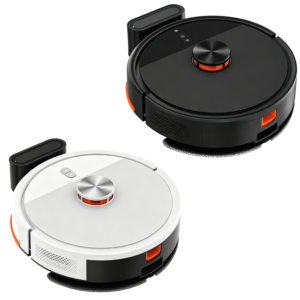
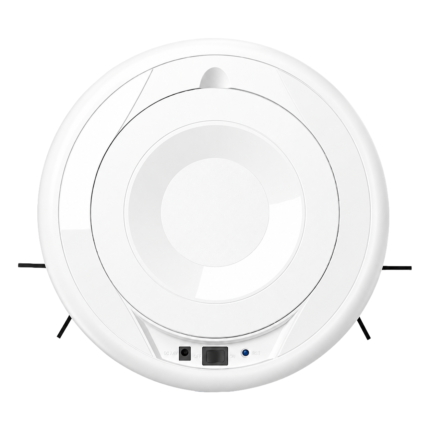
UAHRC01 laser-navigation robot vacuum and mop
2.7kPa peak suction · 14.4V/2600mAh battery · 300ml dustbin · 240ml electronic water tank
Similar products
Ready to order or need a wholesale quote?
Use At Home manufactures these appliances direct from our Guilin, China factory — OEM, private-label and B2B welcome. Tell us your market and volume.